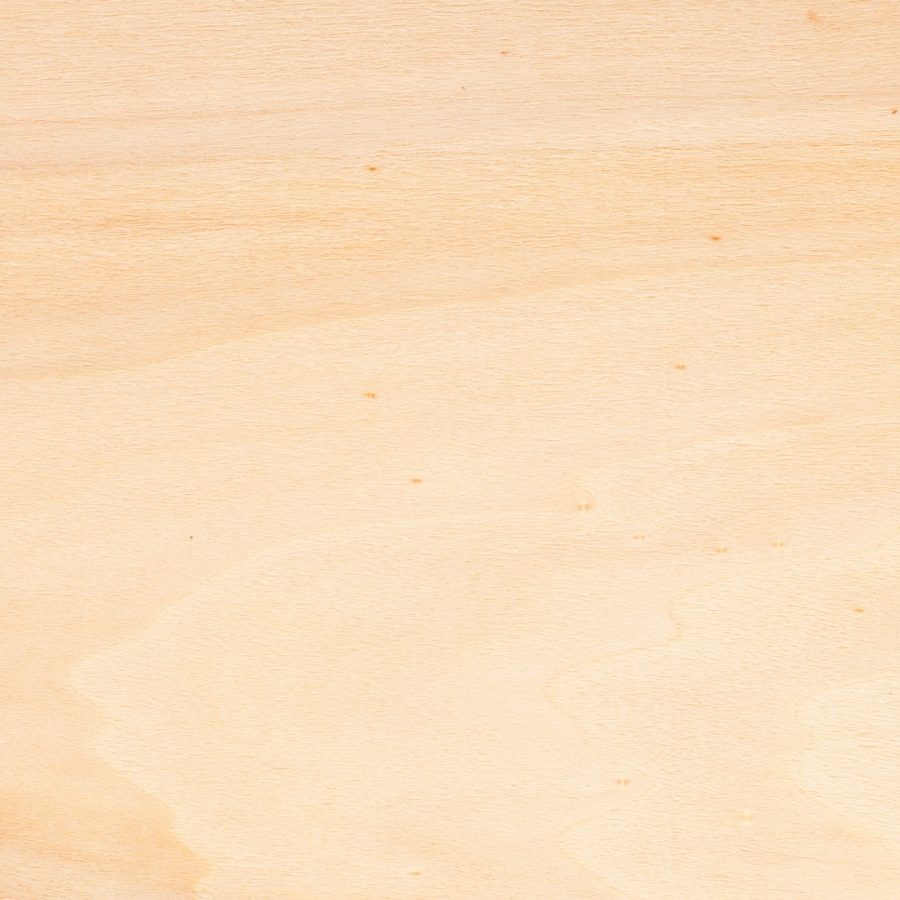
What is Plywood?

Plywood is a multi-layered wood-based material produced by bonding cross-oriented veneer layers under pressure and heat. This composite structure provides high strength, dimensional stability, and reliable performance under moisture conditions.
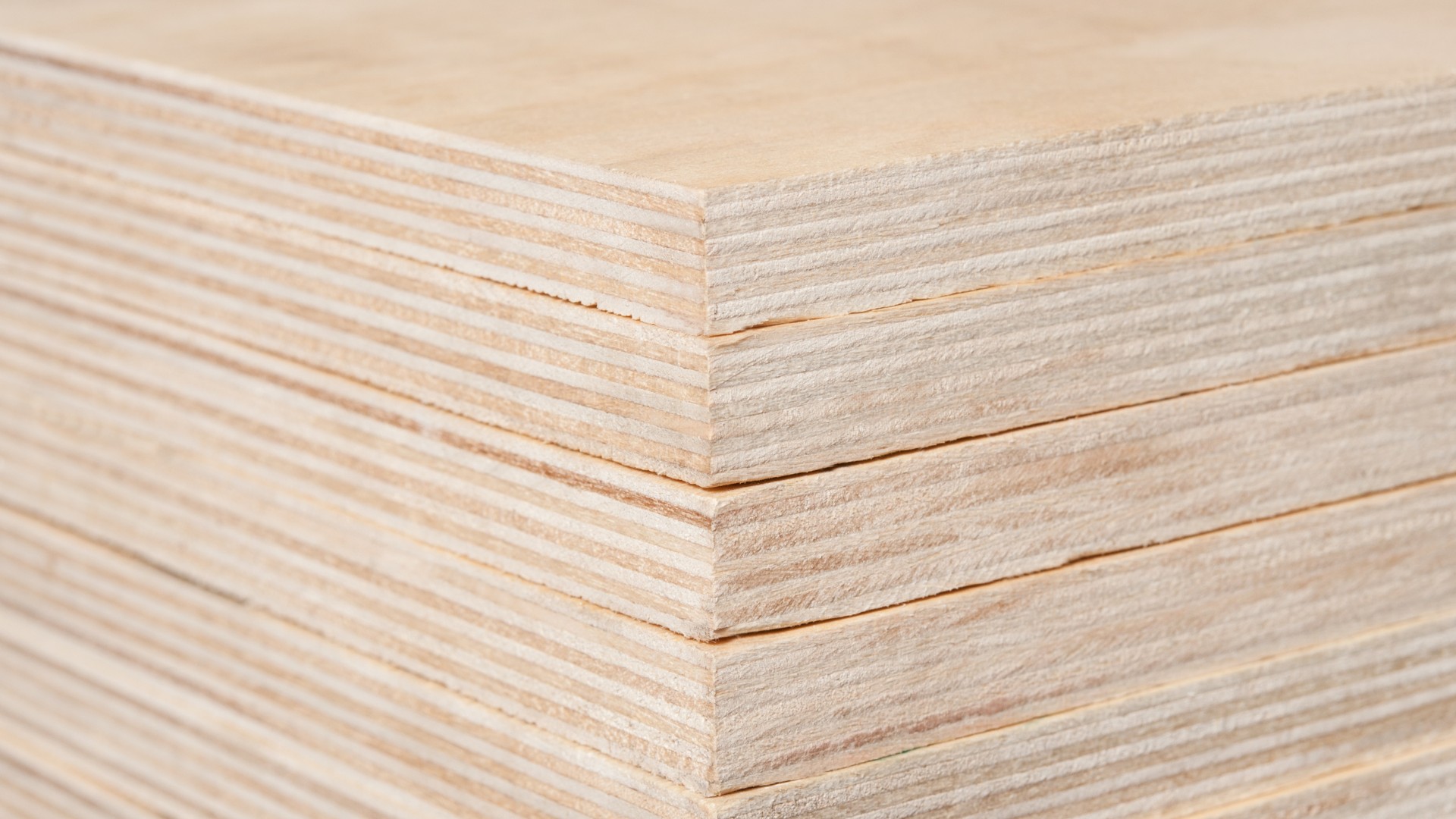
Plywood cross-section — multilayer veneer structure
Plywood cross-section — veneer layers cross-bonded for strength and stability.
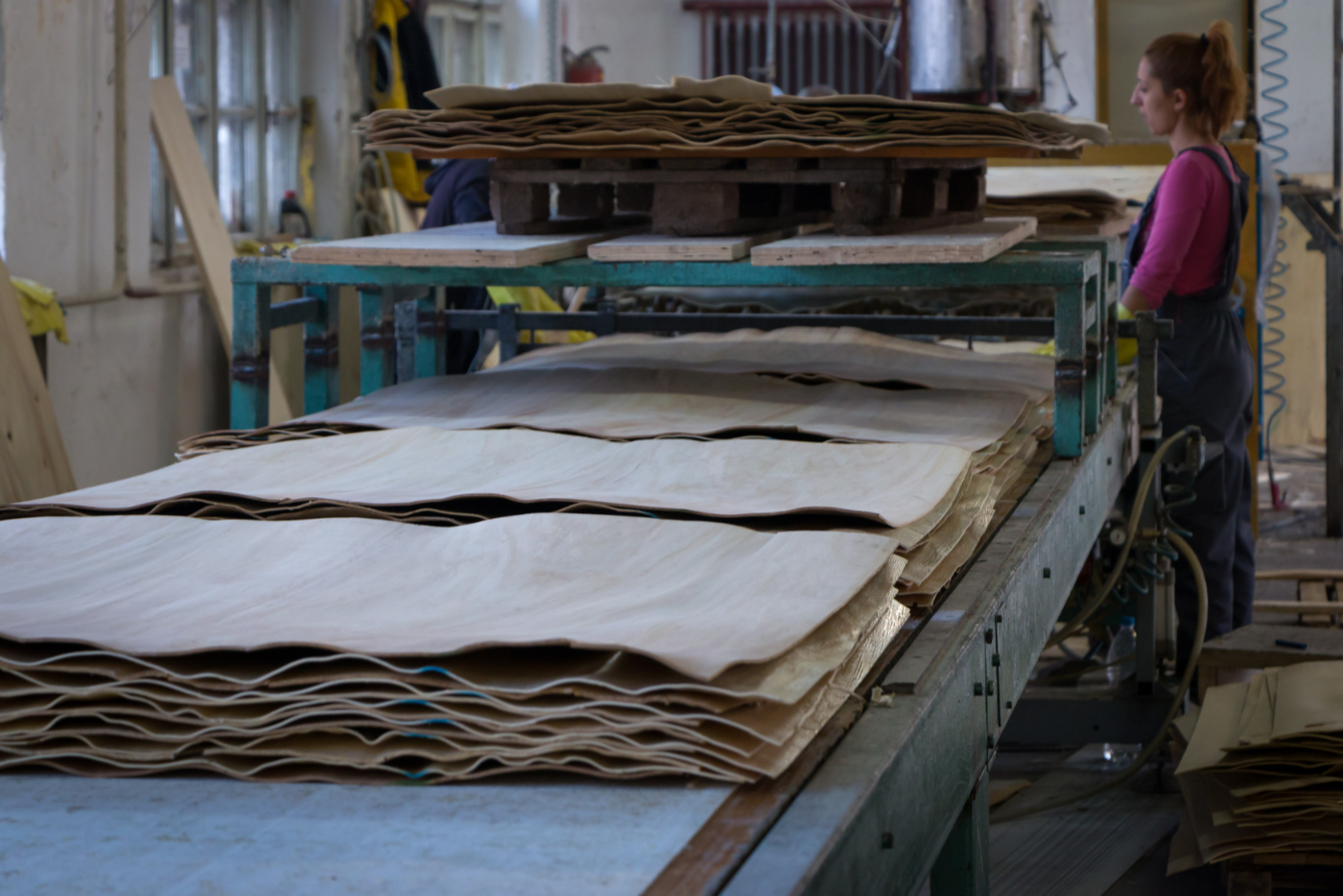
Stacking veneers to form plywood sandwich
Forming the “sandwich” — alternating layers with and without adhesive before pressing.
Full Production Process
Composition & Key Features

What Does Plywood Look Like?

Plywood Structure
Plywood consists of multiple thin layers of wood — veneers — that are cross-oriented (usually at 90°) and bonded under pressure and heat. Cross-lamination neutralizes natural wood deformations and provides high strength and dimensional stability.
Cross-bonded veneers
Symmetrical, usually odd-numbered layers
Sanding (flattening) and cutting to size
Quality inspection of every panel

What Plywood is Made Of

Primarily from poplar veneer (main focus of our production) due to its excellent weight-to-strength ratio, stability, and ease of processing. Other wood types (e.g., birch) are used for specialized applications. Individual veneer layers are typically up to ~7 mm thick, with the total number of layers adjusted to achieve the desired panel thickness.

  • Poplar – standard and most common choice
  • Birch and others – on request / specialized applications
  • Veneer moisture content for bonding ~6–12%

Adhesive and Pressing

We use E1/A1 adhesives in compliance with European standards. After forming the “sandwich,” pressing (pressure + heat) is applied to polymerize the adhesive and permanently bond the layers, followed by cooling/conditioning to prevent deformation.

  • Adhesive type determines interior/exterior suitability
  • Pressing temperature typically ~100–115 °C

Surface Finishing

Panels are flattened (sanded) for a smooth surface and precise dimensions, then cut to size. If necessary, face/back defects are repaired and a quality grade assigned.

  • Smooth surface, clean edges
  • Grades for interior or exterior use

Variants and Specialty Products

In addition to standard plywood, we offer LVL panels (all veneers aligned parallel) for applications where high load-bearing capacity in one direction is critical.

  • Plywood – cross-laminated, multi-directional stability
  • LVL – maximum stiffness along the grain direction
Specification Range / Options Note
Length (mm) 1000 – 2500 customizable on request
Width (mm) 500 – 1300 standard and custom sizes
Thickness (mm) 4 – 40 number of layers according to thickness
Wood Type Poplar (primary), birch etc. on request focus on poplar
Adhesive E1 / A1 EU standards, interior/exterior use
Processing Sanding (flattening), cutting to size smooth surface and precise dimensions
  • The cross-laminated veneer structure provides stability and resistance to warping.
  • Symmetrical (usually odd) number of layers ensures balanced stress distribution.
  • Poplar is ideal due to its low weight, stability, and excellent workability.
Why Choose Poplar Plywood?

Advantages of Poplar as a Raw Material

Poplar is one of the most valued wood species for plywood production due to its exceptional combination of ecological, mechanical, and technological properties. Using locally sourced poplar promotes sustainable forestry and domestic manufacturing.
Fast growth
Environmental sustainability
Easy processing
Good stability
Lightweight
Moisture resistance
FSC certified
Locally sourced

Sustainability and Environmental Responsibility

Poplar grows rapidly and enables renewable plantations, contributing to the protection of natural resources and reduction of CO2 emissions. Our plywood carries the FSC certificate, ensuring it comes from responsibly managed forests.

  • Supports the local economy and ecosystem
  • Lower carbon footprint compared to some imported species
  • 100% utilization of wood material
Poplar vs. Other Wood Species

Comparative Characteristics of Plywood

Compared to other wood types, poplar stands out with its favorable combination of light weight, strength, and ease of processing, making it ideal for a wide range of applications.
Characteristic Poplar Birch Softwoods
Fast growth / Renewability Yes No No
Environmental sustainability Excellent Good Good
Ease of processing Yes Medium No
Weight (density) Low Medium Higher
Moisture resistance Good Excellent Good
Dimensional stability Excellent Excellent Good
Cost-effectiveness Most economical More expensive Highest cost
FSC certification possible Yes Yes Yes

When to Choose Poplar Plywood?

Ideal when priorities are: light weight, cost-effectiveness, ease of processing, good moisture resistance, and a locally sourced, sustainable material. For heavy structural elements or specialized decorative purposes, other wood types may be selected as needed.

Plywood Production – Step by Step

How is Plywood Made?

Plywood production is a multi-stage, precisely controlled process — from selecting logs and veneer peeling to pressing, sanding, and certified delivery.

1. Raw Material Delivery and Cutting

High-quality poplar logs are sourced from renewable plantations. Water transport is eco-friendly — reducing emissions and road traffic impact.

1
2

2. Veneer Preparation and Peeling

Logs are processed and peeled on rotary lathes, producing thin veneer sheets. Poplar is ideal due to its uniform structure, light weight, and ease of machining.

3. Veneer Drying

In continuous and batch dryers, the veneer is dried to 6–12% moisture — ensuring stability, preventing warping, and enabling optimal gluing.

3
4

4. Layer Assembly and Gluing

Veneers are alternately stacked with and without adhesive (E1/A1), cross-oriented, forming a composite “sandwich.”

5. Pressing

The veneer “sandwich” is pressed under pressure and temperature (typically 100–115 °C) — enabling adhesive polymerization and permanent bonding of layers.

5
6

6. Cooling and Conditioning

Boards are gradually cooled and conditioned; temperature and moisture are equalized to prevent internal stresses and warping.

7. Sanding and Cutting

Surfaces are sanded for flatness; then cut to size and edges finished for a clean, precise final product.

7
8

8. Quality Control and Certification

Visual and mechanical inspections, grading, and labeling. Production complies with FSC and E1/A1 standards.

9. Packaging and Storage

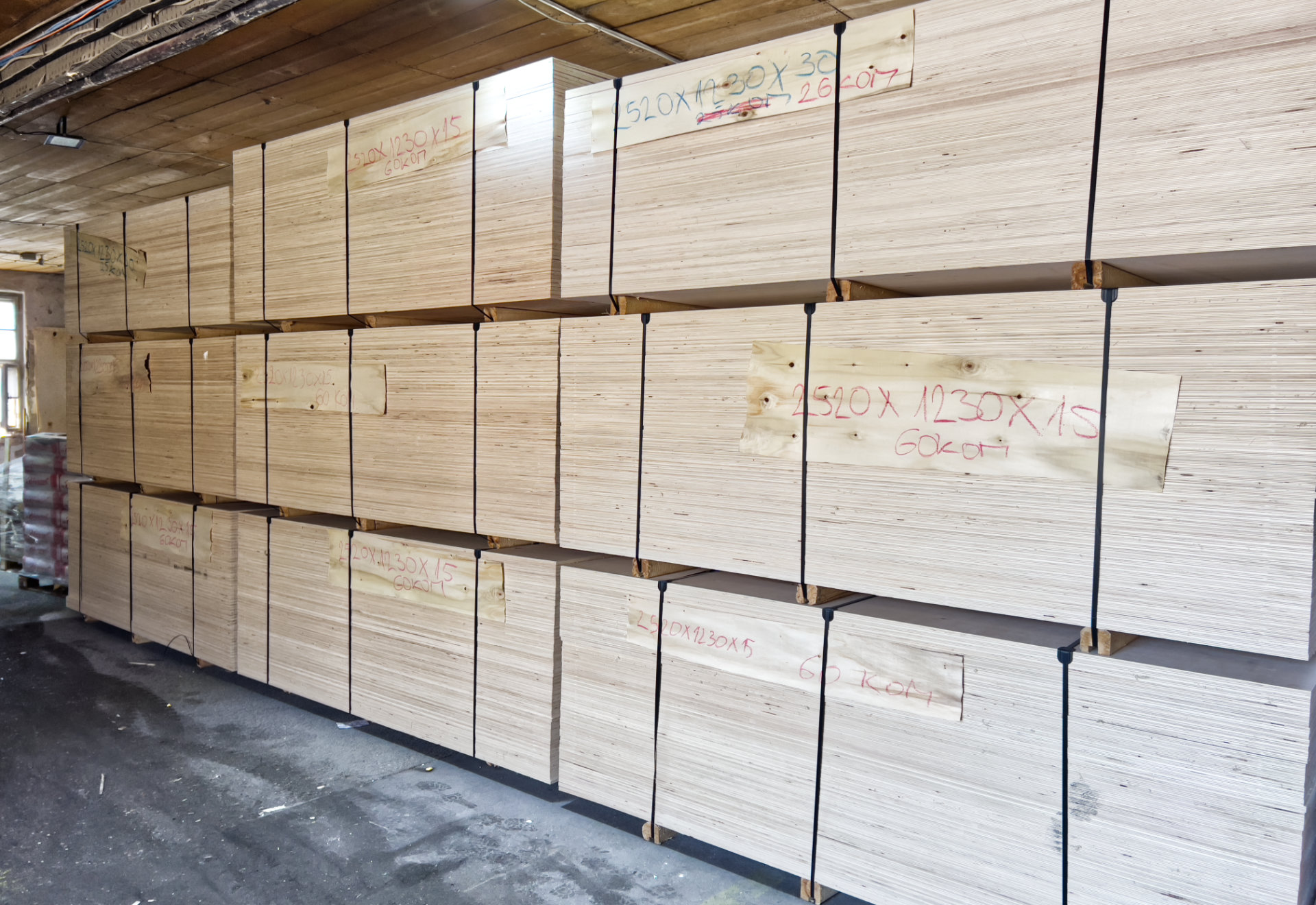
Finished boards are carefully packed and stored under controlled conditions, ready for fast and safe delivery.

9
Plywood Types and Applications

Plywood Types and Applications

Plywood is classified by the number of layers, wood species, adhesive type (interior/exterior), and surface finish. Discover the main types, LVL specials, standard dimensions, and key industrial applications.

Show All Types LVL Dimensions Applications

Number of Layers

Odd, symmetrical number of veneers (3, 5, 7…) for optimal stability. Board thickness depends on total layers (veneer ~7 mm each).

Wood Species

Poplar — standard: light weight, excellent machinability, stable. On request, birch for special requirements.

Poplar Birch

Adhesive / Use

Adhesive type determines resistance: E1/A1 (European standard). Interior/exterior use according to waterproof class.

  • Interior – standard adhesive
  • Exterior – waterproof adhesive

Surface Finish

Sanded and dimensioned surface. Face/back repairs and grading according to quality are possible.

LVL Boards (Special)

LVL (Laminated Veneer Lumber): all layers aligned in the same grain direction — maximum load-bearing capacity and stiffness along the length.
Applications: Structural beams, lintels, formwork, and all elements where linear load transfer is critical.

Specification Range / Options Notes
Length (mm) 1000 – 2500 on customer request
Width (mm) 500 – 1300 standard and custom sizes
Thickness (mm) 4 – 40 number of layers according to thickness
Wood species Poplar (primary), birch on request focus on poplar
Adhesive E1 / A1 EU standards (interior/exterior)
Surface Sanded, dimensioned smooth board, clean edges
Quality Grades Face/back grades based on visual criteria grades according to application
Construction
  • Concrete formwork, scaffolding platforms
  • Floors, wall/roof panels
  • Temporary structures and formwork
Furniture
  • Cabinets, shelves, seats, fronts
  • Bent (laminated) and 3D elements
  • Prototypes, serial and custom production
Packaging & Transport
  • Boxes, crates, pallets, separators
  • Lightweight, strong, cost-effective solutions
Automotive & Shipbuilding
  • Vehicle floors/panels, body fillers
  • Ship linings, structural elements
  • Adhesive/type selection according to moisture requirements
Special Applications
  • Acoustic perforated panels, sports equipment
  • Stage technology, exhibition installations
  • DIY projects, prototypes, custom design

Frequently Asked Questions about Plywood (FAQ)

Most common technical, practical, and ecological questions about plywood and our production.
High-quality plywood has symmetrically arranged, well-bonded layers without voids, a smooth surface, minimally visible knots, properly sanded edges, and uniform color. Certificates (FSC, E1/A1) and visual grade assessments ensure compliance with standards.
Yes, with the appropriate adhesive choice (exterior type, E1/A1) and proper surface finishing. Our boards can be used outdoors — consult us to select the correct class for your application.
These standards indicate low formaldehyde emissions and compliance with European norms. E1/A1 adhesives are safe for sensitive environments such as schools, hospitals, and children’s rooms.
Yes, it uses renewable resources (poplar from FSC-certified forests), has high material utilization, and low CO2 emissions during production. Plywood is suitable for the green construction sector and circular economy initiatives.
Store in a dry, flat, and well-ventilated area, protected from moisture and direct sunlight. Clean the surface with a dry or slightly damp cloth as needed. Avoid mechanical damage to edges for long-lasting performance.
Standard boards are 1000–2500 mm long, 500–1300 mm wide, and 4–40 mm thick. For special requirements, contact us for custom dimensions.
The minimum thickness in our range is 4 mm, and the maximum is 40 mm, depending on the number and type of veneer layers.
LVL (Laminated Veneer Lumber) boards have all veneer layers aligned in the same direction — used for beams, lintels, and areas requiring high load capacity along a single axis.
Yes — it can be reused as raw material for new boards, as fuel, or for other wood products. Recycling depends on adhesive type and surface finish.
Plywood is a multi-layered panel of cross-laminated veneers for strength and precise dimensions; OSB consists of oriented wood strands. Plywood generally offers higher quality and stability for demanding applications.

Why Choose Demka Trade / Plywood.rs?

20+ Years of Tradition
A reliable partner with long-term experience in plywood production and export.
Certificates: FSC, EPAL
Production according to the highest European standards — suitable for any market.
State-of-the-Art Equipment
Automated plant, precise quality control, and modern logistics.
EU Exports
Over 90% of our production is exported to EU countries and the regional market.
Quality & Reliability
Flexible delivery, tailored solutions, and a professional approach to every customer.

Stay Updated on Our Production Program

Sign up to receive occasional updates on our product range, technical improvements, and the latest news from Demka Trade plywood production.

Sign up to receive occasional updates on our product range, technical improvements, and the latest news from Demka Trade plywood production.